
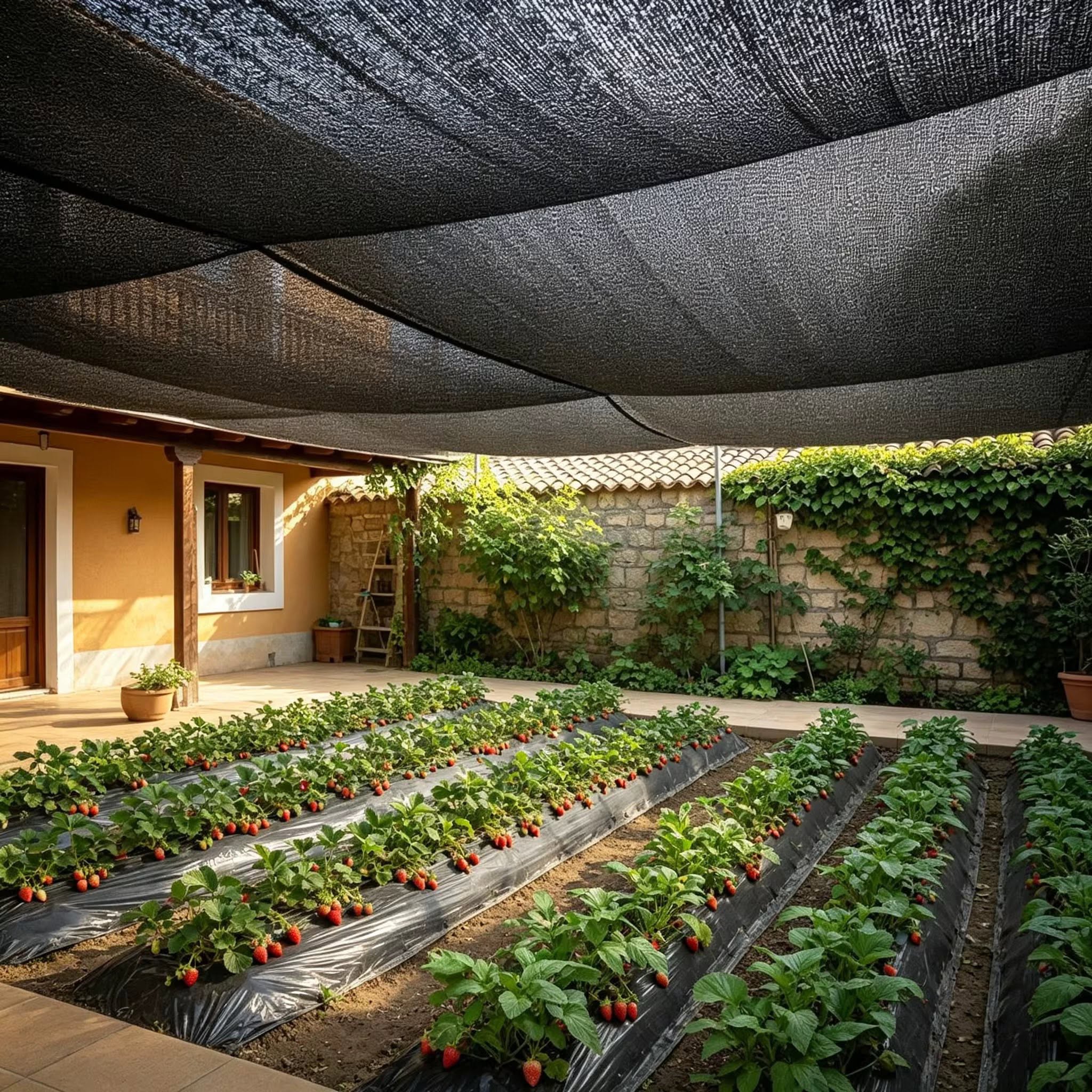
Thailand's greenhouse vegetable projects must manage strong solar radiation, high temperatures, monsoon rain, humidity, and periods of low cloud. A shade net should be selected with the crop and greenhouse ventilation plan together, because reducing light without controlling heat and moisture can create a new production problem.
Start with the Thai crop and production season
Tomatoes, cucumbers, peppers, leafy vegetables, and nursery plants have different light and humidity requirements. A protected farm in the central plain may face a different heat and rain pattern from a higher-elevation site in the north or a coastal location in the south.
Provide the province or production area, crop variety, crop stage, greenhouse covering, roof height, vent layout, and months of operation. The same shade net should not automatically be specified for seedling, fruiting, and leafy-crop houses.
Manage hot-season radiation without closing the greenhouse
During bright hot periods, a roof screen can reduce direct radiation and canopy temperature. However, a dense screen placed too low or combined with closed sidewalls may reduce air exchange and keep heat around the crop.
Compare shade percentage, light transmission, open area, color, and screen position. During a trial, measure inside and outside temperature, leaf or canopy temperature, humidity, light level, irrigation demand, and crop growth rather than judging the net by appearance.
Design for monsoon rain and humid air
Monsoon conditions make drainage, drying, disease scouting, and access important. An external shade net must tolerate rain and wind while preserving roof-vent operation; an internal screen must not obstruct the movement of warm, humid air toward the vents.
Specify clearance around gutters, vents, fans, irrigation lines, and access doors. Include a seasonal operating plan that explains when to retract, secure, clean, or remove panels during heavy rain and storms.
Match construction and fixing to the greenhouse
Knitted constructions can suit flexible or retractable systems, while a stable woven construction may be preferred for fixed roof panels and sidewalls. The choice should be made from the greenhouse geometry, handling cycle, wind exposure, and required panel dimensions.
Ask for GSM, yarn type, open area, stretch tolerance, edge reinforcement, seam layout, clips or wires, support spacing, and replacement-panel dimensions. Specify the finished panel instead of ordering only by total square metres.
Compare Thai greenhouse operating conditions
| Project condition | Main priority | What to confirm |
|---|---|---|
| Hot bright season | Radiation control with heat release | Shade test, open area, vent clearance, canopy temperature |
| Monsoon greenhouse | Rain handling and air exchange | External or internal position, drainage, side vents, fixing |
| Tomato or cucumber house | Light and humidity balance | Crop stage, canopy data, irrigation, disease access |
| Leafy vegetable house | Moderate light reduction and cooling | Light transmission, color, airflow, harvest cycle |
| Coastal or storm-exposed site | UV and wind durability | UV evidence, hems, support spacing, seasonal removal |
Thailand-specific commercial RFQ checklist
- Province or growing area, elevation, and coastal exposure
- Crop, variety, growth stage, and production season
- Greenhouse covering, roof height, vent and fan layout
- External or internal, fixed or retractable screen position
- Target shade percentage, color, light transmission, and test method
- Construction, GSM, open area, stretch, width, length, and tolerance
- UV stabilization basis and expected outdoor exposure
- Monsoon rain, wind, drainage, cleaning, and severe-weather procedure
- Edges, seams, clips, cables, drive compatibility, and spare panels
- Trial area, approved sample, roll packing, and Thailand delivery point
Frequently asked questions
What shade net is suitable for greenhouse vegetables in Thailand?
The suitable net depends on crop, season, greenhouse ventilation, screen position, local solar load, and rain exposure. Compare exact samples by shade, transmission, open area, temperature, and humidity response.
Should a Thai greenhouse use external or internal shade net?
External screens can intercept radiation before it enters, while internal screens may be easier to operate and protect. Select from vent layout, wind and rain exposure, heat movement, and the operating schedule.
What should I include in a Thailand shade-net quotation request?
Send the province, crop, greenhouse drawing, covering, vent layout, screen position, shade target, construction, panel sizes, monsoon and wind conditions, quantity, and delivery destination.
Send us your purchasing requirements.
Include the target specification and quantity for a more useful response.
Get a Quote