
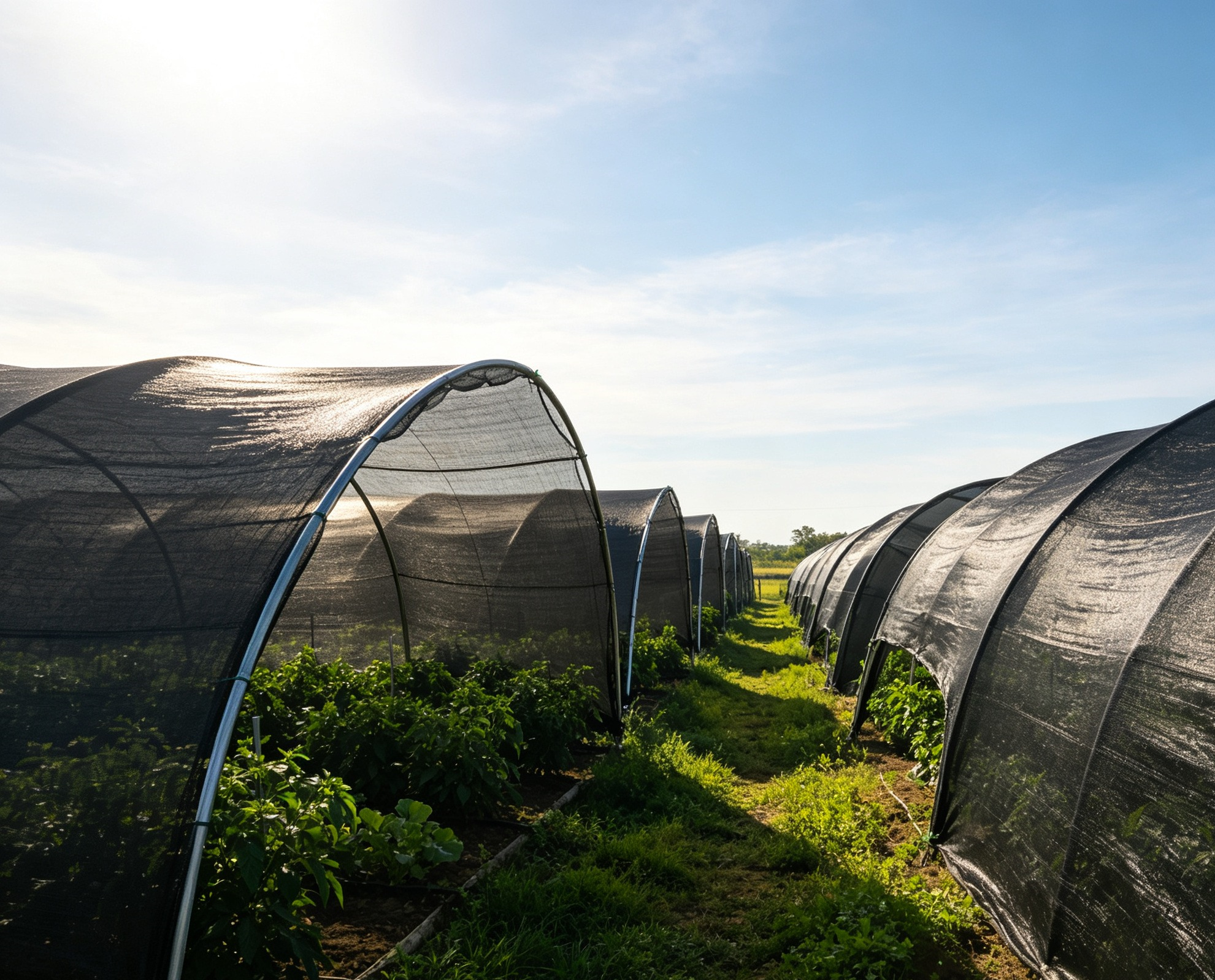
Tomato and pepper nurseries in Nigeria can face intense dry-season sun, hot nursery structures, heavy rainy-season humidity, Harmattan dust, and strong local winds. The useful specification is not simply a shade percentage: it must fit the production zone, seedling stage, ventilation, operating season, structure, and maintenance plan.
Start with Nigeria's growing zone and nursery season
A nursery in the humid south does not operate under the same conditions as one in the Middle Belt or the hotter northern savanna. Rainfall pattern, cloud cover, daytime heat, wind, dust, elevation, and the length of the seedling cycle all change how a shade net performs.
State the farm location, sowing months, nursery type, crop varieties, transplant age, and whether the net is installed over a roof, sidewall, hardening area, or simple tunnel. These details help a supplier quote a relevant construction instead of a generic roll.
Protect tomato and pepper seedlings without weak growth
Young tomato and pepper plants may benefit from reduced solar stress during emergence and early growth, but excessive or poorly timed shade can encourage elongated seedlings and slow hardening before transplanting. Shade level should therefore be linked to crop stage and seasonal light, not selected once for every month.
Compare candidate nets using measured light transmission for the exact color and construction. During a trial, record stem thickness, plant height, leaf color, root development, irrigation frequency, and recovery after transplanting.
Balance dry-season cooling with rainy-season airflow
In the dry season, shade can reduce direct radiation and water demand, while open sides and adequate roof height help release accumulated heat. During the rainy season, airflow and drying become especially important because a dense or low-installed cover can hold humid air around tender plants.
The operating plan may use one roof net with adjustable side ventilation, or removable panels for different seasons. Ask for open-area information, finished panel size, overlap, and access for irrigation, scouting, spraying, and cleaning.
Plan for Harmattan dust, wind, and maintenance
Dust collecting on a dark net can alter light transmission and airflow, so cleaning access and water availability belong in the purchase decision. Wind movement can also load hems, seams, clips, posts, and contact points even when the fabric itself remains intact.
Specify reinforced edges, suitable fixing intervals, replaceable panels, repair material, and a procedure for securing or removing the cover before severe weather. Review fasteners and supporting wires as part of the complete system rather than buying fabric alone.
Compare Nigerian nursery operating conditions
| Operating condition | Main shade-net priority | Checks before ordering |
|---|---|---|
| Hot, dry northern season | Radiation reduction with heat release | Shade test, roof height, side ventilation, dust cleaning |
| Humid southern rainy season | Airflow and rapid crop drying | Open area, side openings, drainage, disease-management access |
| Harmattan period | Stable optical performance after dust exposure | Cleaning method, water access, color, sample inspection |
| Open or wind-exposed nursery | Panel and fixing stability | Finished dimensions, reinforced hems, clips, support spacing |
| Seedling hardening stage | Adjustable or removable shade | Operating schedule, panel handling, storage, crop observations |
Nigeria-specific commercial RFQ checklist
- State, production zone, elevation, and nearest delivery point
- Tomato or pepper variety, seedling stage, and transplant calendar
- Dry-season, rainy-season, or year-round operating period
- Roof, sidewall, tunnel, or hardening-area installation
- Target shade percentage, color, and test method
- Construction, GSM, open area, width, length, and dimensional tolerance
- UV stabilization basis and expected outdoor exposure
- Rain, wind, Harmattan dust, cleaning, and seasonal removal plan
- Hems, seams, eyelets, clips, support wires, and repair pieces
- Trial quantity, approved sample, roll labels, packing, and destination port
Frequently asked questions
What shade percentage is suitable for tomato and pepper seedlings in Nigeria?
There is no universal percentage for every Nigerian zone and season. Shortlist the shade level from local solar load, nursery design, crop stage, ventilation, and a side-by-side trial using the exact net.
How does Harmattan affect nursery shade net?
Dust can change light transmission and restrict airflow, while dry wind can increase movement at edges and fixing points. Plan inspection, cleaning access, reinforced edges, and a secure fixing method.
What should a Nigerian buyer send for a shade-net quotation?
Send the farm state and growing zone, crop, seedling schedule, structure dimensions, shade target, operating months, rain and wind exposure, quantity, packing needs, and delivery destination.
Send us your purchasing requirements.
Include the target specification and quantity for a more useful response.
Get a Quote