
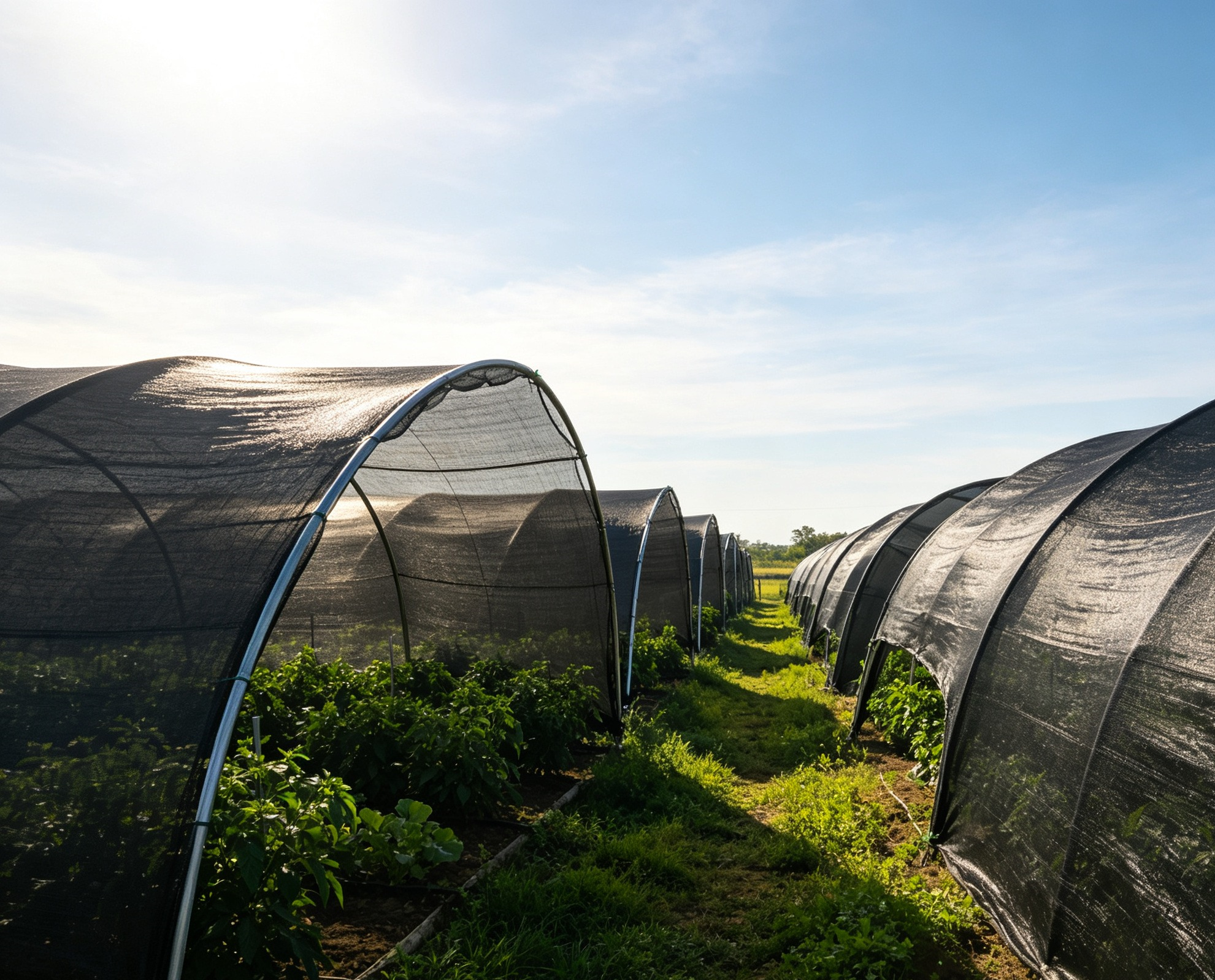
Vegetable nurseries in India must protect young plants from intense summer radiation while keeping air moving through hot, humid monsoon periods. A workable shade-net specification connects the crop stage and local growing season with ventilation, rain, wind, UV exposure, and the structure used by the nursery.
Match the net to India's nursery calendar
Nurseries supplying tomato, chilli, cabbage, cauliflower, cucumber, and other vegetable transplants may operate through very different heat and rainfall windows. Summer production needs radiation control and ventilation; monsoon production needs rapid drying, secure fixing, and enough open area to limit stagnant humidity.
State the production state or region, sowing calendar, crop stage, and whether the net covers a roof, sidewall, hardening area, or open nursery bay. A quotation based only on total square metres leaves out the conditions that determine performance.
Choose shade for seedlings, not for the label
Young seedlings generally need a gentler light environment than mature field crops, but excessive shade can produce weak, elongated plants and delay hardening. Compare the target shade percentage with plant height, leaf color, irrigation frequency, and the amount of direct sun reaching the nursery.
Use the exact color and construction for any light-transmission comparison. A nominal 50% label should be treated as a starting point until the test method, sample condition, and installation tension are known.
Keep monsoon air moving through the nursery
During humid weather, a dense cover can reduce direct radiation yet restrict ventilation if it is installed close to the crop or blocks side openings. Plan the roof and sidewall positions together, leaving practical routes for air movement and rainwater management.
Ask for open area, finished dimensions, edge treatment, and fixing details. Include access for inspection and spraying, because a net that is difficult to open or remove can increase labor and disease-management problems.
Specify UV and structure requirements for Indian exposure
India includes intense sun, dusty conditions, coastal exposure, highland production, and strong seasonal storms. UV stabilization should be specified for the expected outdoor exposure and supported by information about the exact polymer construction, not only by a generic multi-year claim.
For roof panels and exposed sides, confirm GSM, tensile and tear behavior, width tolerance, reinforced edges, eyelets or clips, overlap, and the procedure for removing or securing the net before severe weather.
Compare practical options before a bulk order
| Nursery situation | Selection priority | What to verify |
|---|---|---|
| Hot summer seedling bay | Moderate shade with airflow | Shade test, open area, crop response, roof height |
| Humid monsoon period | Ventilation, drying, and drainage | Side openings, rain handling, fixing, cleaning access |
| Open hardening area | Wind stability and easy removal | Panel size, reinforced hems, clips, seasonal storage |
| Coastal or high-UV site | Weathering and corrosion resistance | UV evidence, color stability, fasteners, retained sample |
India-specific RFQ checklist
- State, growing region, elevation, and production season
- Vegetable crop, seedling age, and hardening schedule
- Roof, sidewall, tunnel, or open nursery position
- Target shade percentage, color, and test method
- GSM, construction type, width, length, and tolerance
- UV stabilization basis and expected outdoor exposure
- Monsoon rainfall, wind, dust, and coastal conditions
- Reinforced edges, seams, clips, eyelets, overlap, and repair method
- Trial quantity, approved sample, and retained production sample
- Roll labels, packing, and destination port or inland delivery
Frequently asked questions
What shade net is best for vegetable nurseries in India?
There is no single best percentage for every crop or season. Select the shade target from seedling stage, local solar load, ventilation, monsoon humidity, and a trial under the intended structure.
Should Indian nurseries use shade net during the monsoon?
They may need it for light control and rain management, but the installation must preserve airflow and allow drying. Confirm side ventilation, open area, drainage, and safe removal in severe weather.
What should I include in an India shade-net quotation request?
Send the state or growing region, crop, seedling stage, structure dimensions, shade target, color, outdoor months, wind and rain conditions, quantity, and delivery destination.
Send us your purchasing requirements.
Include the target specification and quantity for a more useful response.
Get a Quote