
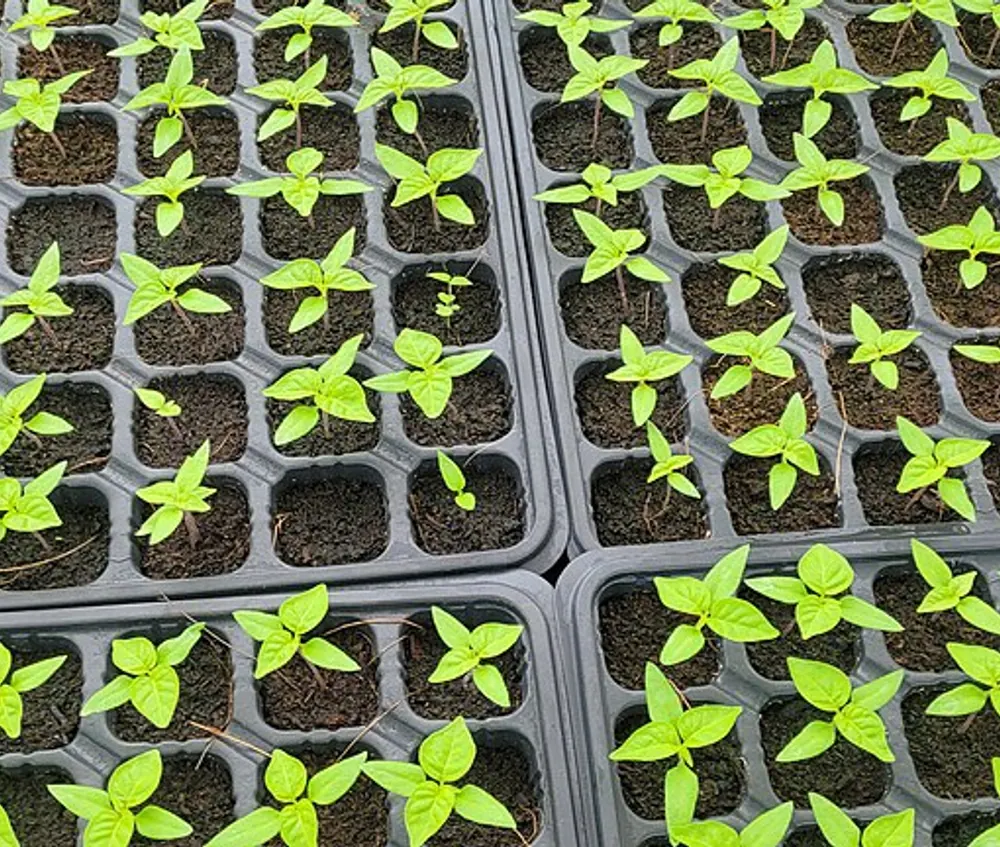
Vegetable nurseries in Uganda need seedling trays that balance root volume, drainage, handling strength and nursery capacity. Tomato, pepper, cabbage and leafy vegetables do not always need the same cell size, and a tray selected only by its cell count can produce weak plugs or unnecessary growing-medium cost.
Match the tray to crop and transplant age
A longer nursery period generally needs more root volume than a short-cycle seedling. Tomato and pepper seedlings may remain in the nursery longer than fast-growing brassicas or leafy vegetables, while grafted plants need additional space and handling stability.
State the crop, expected days in the nursery, target transplant size, growing medium and irrigation method before choosing the tray. Cell count should be evaluated together with top opening, depth, taper and actual cell volume.
Plan for Uganda's heat, rain and nursery hygiene
Warm conditions can dry small plugs quickly, while humid or rainy periods increase the importance of drainage, airflow and sanitation. Tray benches should keep cells off contaminated ground and allow excess irrigation water to leave evenly.
Dark trays can heat under direct sun, so nursery cover, watering schedule and bench layout should be considered. Clean reusable trays between cycles and verify that the material tolerates the intended washing and disinfection method.
Compare common nursery tray decisions
| Decision | Smaller cells / higher count | Larger cells / lower count |
|---|---|---|
| Nursery capacity | More plants per tray | Fewer plants per tray |
| Root volume | Lower; irrigation control is critical | Higher; supports longer nursery periods |
| Growing medium | Lower use per plant | Higher use per plant |
| Handling | Small plugs need careful extraction | Larger plugs may transplant more easily |
| Best fit | Short cycles and compact seedlings | Longer cycles, larger or grafted seedlings |
Specify strength, dimensions and compatibility
Confirm outside dimensions, cell count, cell volume, tray weight, material, drainage-hole design and nesting height. The tray must fit existing benches, filling equipment, transport crates and transplant routines.
For reusable trays, ask how repeated loading, sunlight and cleaning affect rigidity. For lighter seasonal trays, focus on consistent forming, clean cell edges and reliable separation from the stack.
Uganda seedling-tray RFQ checklist
- Crop varieties and expected nursery duration
- Required cell count, opening, depth and cell volume
- Tray outside dimensions and bench compatibility
- Growing medium, irrigation, drainage and extraction method
- Single-use or reusable cycle and sanitation method
- Material, tray weight, rigidity and UV exposure
- Quantity, stack height, cartons and delivery destination
Frequently asked questions
What seedling tray cell count is suitable for vegetables in Uganda?
It depends on crop, nursery duration, target transplant size, medium and irrigation. Compare measured cell volume and depth rather than cell count alone.
Can seedling trays be reused?
Suitable trays can be reused when their material and strength match the cycle and they are cleaned and disinfected correctly between crops.
What details are needed for a nursery-tray quotation?
Send crop, cell count or volume, outside dimensions, tray weight or durability target, quantity, packing and delivery location.
Send us your purchasing requirements.
Include the target specification and quantity for a more useful response.
Get a Quote