
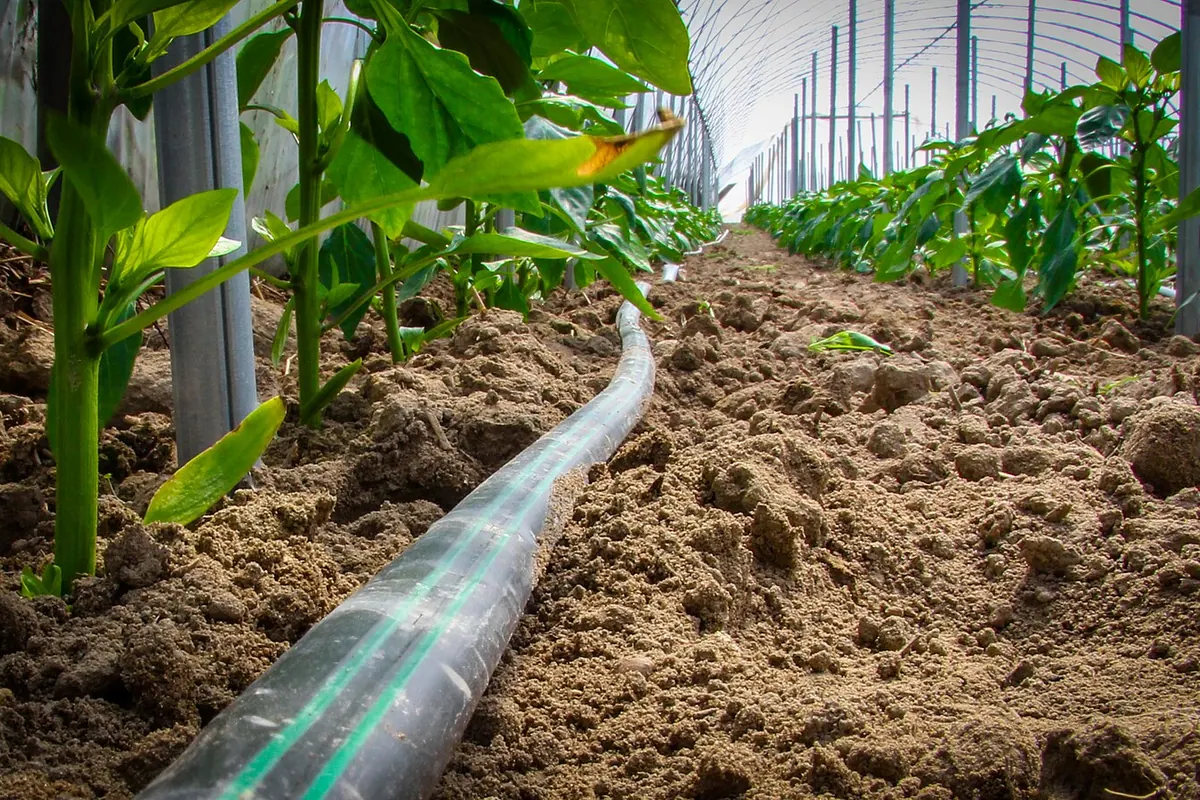
If the first rows receive water but the far emitters weaken, replacing the tape may not solve the real problem. Well water can carry suspended sand, dissolved minerals, iron and microorganisms. Each creates a different blockage, so the useful first question is not 'Which tape never clogs?' but 'What is in the water and where is the restriction forming?'
Quick answer: match the treatment to the blockage
Use a water analysis and inspect material collected from filters and emitters. Sand and silt require suitable separation and filtration; mineral scale needs chemistry-based management; iron and biological slime may require oxidation, treatment and flushing designed by an irrigation specialist.
No emitter is immune to poorly managed water. Emitter geometry, filtration rating, operating pressure, flushing velocity, lateral length and maintenance schedule work as one system.
Read the symptoms before changing equipment
| Observed symptom | Possible cause | What to check first |
|---|---|---|
| Grit in filter or line ends | Sand or suspended solids | Water sample, separator and filter loading |
| Hard pale deposits | Carbonate or mineral precipitation | pH, alkalinity, hardness and injection practice |
| Orange or brown deposits | Iron oxidation | Dissolved iron, aeration and filter media |
| Slippery dark material | Biological growth | Storage tank, organic load and sanitation plan |
| Weak flow mainly at row ends | Pressure loss or inadequate flushing | Inlet pressure, lateral length, elevation and end valves |
Build filtration around measured water quality
A screen or disc filter should be selected from the emitter manufacturer's requirement and the actual particle load, not from pipe diameter alone. Sand-heavy boreholes may need hydrocyclonic separation before fine filtration. Surface storage can add algae and organic matter that behave differently from mineral particles.
Record clean and dirty pressure on both sides of the filter. A filter that is too small may require constant cleaning; one that is not maintained becomes the restriction it was meant to prevent.
Pressure and flushing are part of clog prevention
Confirm pressure at the manifold and at representative lateral ends while the selected irrigation zone is operating. Excessive row length, elevation change or too many laterals in one zone can imitate clogging by producing low downstream pressure.
Provide flush points at submains and lateral ends. The flushing schedule should reflect water quality and field observations. Chemical treatment must be based on analysis, material compatibility and qualified local advice; do not copy an acid or disinfectant dose from an unrelated farm.
RFQ checklist for well-water drip tape
- Water source and laboratory analysis, including suspended solids, pH, hardness and iron
- Crop, row spacing, lateral length, field slope and irrigation-zone size
- Emitter spacing, nominal flow and required operating pressure
- Existing pump, mainline, separator, filter type and filtration rating
- Observed deposit color, texture and location
- Flushing valves, treatment equipment and maintenance routine
- Tape wall thickness, roll length, quantity and delivery destination
Frequently asked questions
What filter should be used for drip tape with well water?
Select the treatment train from water analysis, particle type and emitter requirement. Sand may require separation before screen or disc filtration, while iron or biological contamination may need additional treatment.
Can higher-pressure flushing clear every blocked emitter?
No. Flushing can remove loose material from lines, but hardened mineral deposits or internal biological growth require diagnosis and a compatible treatment plan.
Does thicker drip tape clog less?
Wall thickness affects durability more than water cleanliness. Clogging risk depends primarily on water quality, emitter design, filtration, pressure, flushing and maintenance.
Send us your purchasing requirements.
Include the target specification and quantity for a more useful response.
Get a Quote