
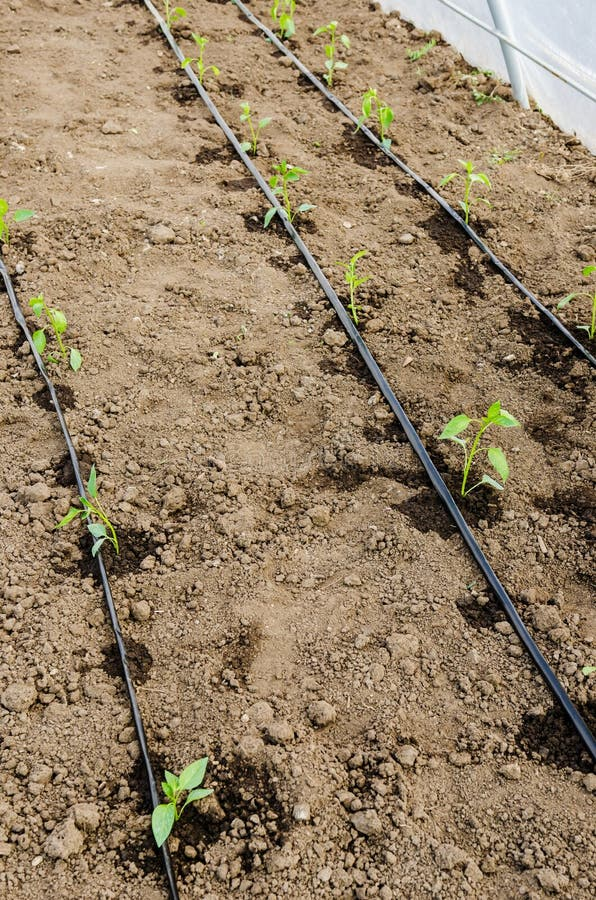
Vegetable farms in Indonesia must manage high rainfall, humid air, variable soils, water quality, and crop rows that may be installed in open fields, plastic tunnels, or greenhouse beds. Drip irrigation tape should be specified around emitter spacing, row length, filtration, pressure, and the wet-season operating plan rather than selected only by roll price.
Define the Indonesian crop and field layout
Tomato, chilli, cucumber, melon, leafy vegetables, and nursery crops may require different emitter spacing and irrigation intervals. Flat lowland fields, sloped areas, volcanic soils, sandy coastal soils, and raised greenhouse beds also change how water moves from the tape.
Send the island or production region, crop and row spacing, bed width, row length, slope, water source, pump pressure, filtration, and whether the tape is seasonal or reused. A complete layout lets the supplier check hydraulic uniformity before recommending a roll length.
Match emitter spacing and flow to tropical soils
Closer emitters can distribute water more evenly in a narrow bed or fast-draining soil, while wider spacing may suit crops with larger wetted zones. Nominal flow must always be compared at the same test pressure.
For a quotation, state emitter spacing, nominal litres per hour per outlet, total flow per 100 metres, working-pressure range, and the expected row length. Do not compare two tapes only by the number printed on the roll.
Plan filtration and flushing for wet-season water
Heavy rain does not guarantee clean irrigation water. Surface runoff, organic matter, algae, sediment, minerals, and storage-tank contamination can still clog emitters. A tropical irrigation design needs filtration, flushing, and access for routine inspection.
Provide a water analysis when available and identify the intake, filter, mainline, submain, and end-flush arrangement. Confirm the tape passage, recommended filtration, connector compatibility, and how the system will be cleaned after muddy events.
Choose wall thickness and cycle length
Thin-wall tape can be economical for controlled seasonal vegetable production when installation and retrieval are organized. A thicker wall may suit repeated handling, longer cycles, greenhouse use, or fields where machinery and workers create more contact risk.
Specify thickness in mil or millimetres, tolerance, tensile and burst requirements, roll length, core, and the expected number of crop cycles. Include UV stabilization when tape remains exposed above the soil or inside a bright protected structure.
Compare Indonesian drip-tape conditions
| Farm condition | Main priority | What to confirm |
|---|---|---|
| Raised vegetable beds | Uniform wetting along short rows | Emitter spacing, flow at pressure, connector layout |
| Long open-field rows | Pressure and flow uniformity | Row length, slope, pressure range, end flushing |
| Rainy-season operation | Filtration and drainage control | Water source, sediment, filter, flushing, disease plan |
| Greenhouse or tunnel | Repeat handling and clean routing | Wall thickness, UV grade, crop cycle, support clips |
| Sandy or fast-draining soil | Wetted-zone coverage | Spacing, irrigation interval, flow and soil infiltration |
Indonesia-specific RFQ checklist
- Island, province, farm elevation, and delivery location
- Crop, row spacing, bed width, row length, soil, and slope
- Emitter spacing, flow rate, pressure range, and total project length
- Water source, filtration, flushing, and water-treatment plan
- Wall thickness, tolerance, UV exposure, cycle length, and handling method
- Tape diameter, roll length, core, connectors, punches, and end closures
- Rainfall, drainage, flooding risk, and protected or open-field installation
- Trial quantity, flow-test record, approved sample, lot traceability, and packing
- Container loading, labels, and spare-roll or replacement terms
Frequently asked questions
What drip tape spacing is suitable for vegetable farms in Indonesia?
It depends on crop row spacing, soil texture, slope, row length, emitter flow, and irrigation interval. Specify the layout and compare total flow at the same pressure before selecting spacing.
Does heavy rain remove the need for drip irrigation in Indonesia?
No. Rainfall can be uneven or excessive while the root zone still dries between events. Drip systems provide targeted control, but they must be coordinated with drainage and wet-season management.
What should an Indonesian buyer include in a drip-tape RFQ?
Send the region, crop, row layout, soil, water source, pressure, filtration, required flow, roll length, cycles, quantity, and delivery destination.
Send us your purchasing requirements.
Include the target specification and quantity for a more useful response.
Get a Quote